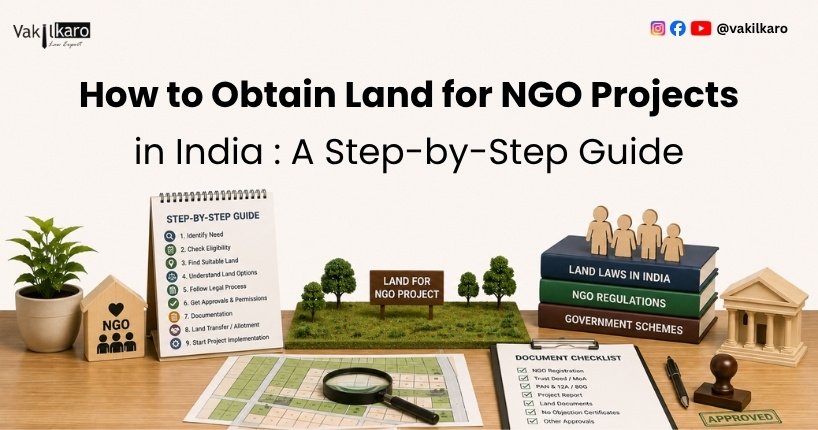
Acquiring land for NGO projects in India involves understanding legal frameworks, securing proper registration, and ensuring compliance with various laws. NGOs must first register under the Societies Registration Act, Trusts Act, or Section 8 Company Registration to be legally recognized. Land can be acquired through purchase, lease, or donation, each requiring thorough due diligence. Additionally, securing funding through donations, grants, or loans is essential, with 12A and 80G registrations offering tax benefits. NGOs must also conduct a detailed land assessment and ensure proper agreements and registrations are in place. Proper planning and adherence to legal processes ensure successful project execution.
Key Takeaways
- Acquiring land for NGO projects in India involves understanding legal frameworks, securing proper registration, and ensuring compliance with various laws.
- Steps to Acquire Land for NGO Projects in India Non-Governmental Organizations (NGOs) in India play a vital role in addressing key social challenges across sectors like education, healthcare, environment, and rural development.
- Step 2: Registering the NGO (NGO Registration) An NGO must be officially registered before it can acquire land.
- If the NGO has secured land through government allotment or lease, it must obtain the necessary government approvals and complete any registration procedures.
- Conclusion Acquiring land for NGO projects in India is a complex and multifaceted process that requires careful planning, financial management, and legal compliance.
Steps to Acquire Land for NGO Projects in India
Non-Governmental Organizations (NGOs) in India play a vital role in addressing key social challenges across sectors like education, healthcare, environment, and rural development. One of the most crucial aspects of implementing large-scale initiatives is acquiring land. Whether for setting up a school, community center, or health clinic, having a legal and compliant process for obtaining land is essential for any NGO’s success.
The first step for any NGO is to ensure legal recognition by obtaining proper NGO registration. Organizations can register under the Societies Registration Act, Indian Trusts Act, or as a Section 8 company under the Companies Act, 2013. Each type of registration grants legal status and the ability to own and manage assets like land.
Land can be acquired through various means such as purchase, lease, or donation. Regardless of the method, NGOs must conduct due diligence by verifying ownership, checking for legal disputes, and ensuring the land’s use aligns with zoning regulations. For leased or government-allocated lands, NGOs may need to submit detailed project proposals and fulfill additional criteria to prove the land will be used for charitable purposes.
Financial planning is also critical. NGOs often raise funds through donations, grants, or corporate partnerships. Those with 12A and 80G registration are in a stronger position to attract donors, as these registrations offer tax exemptions to the NGO and tax deductions to contributors.
After securing the land, NGOs must formalize the transaction by registering the land or lease deed with the appropriate authority. Government approvals for construction, environmental impact, and project development must also be obtained before initiating work.
By following these structured steps and maintaining compliance, NGOs can secure land confidently and focus on delivering sustainable social impact across communities in India.
Non-governmental organizations (NGOs) in India are vital agents of social change, actively working to uplift marginalized communities and address critical issues such as poverty, illiteracy, inadequate healthcare, gender inequality, and environmental degradation. Through a variety of grassroots initiatives, NGOs fill important gaps in public welfare by delivering services, advocating for rights, and driving awareness campaigns. Their mission-driven work often involves building physical infrastructure such as community centers, schools, clinics, shelters, or nature conservation hubs—all of which require land.
Despite their noble intentions and far-reaching efforts, many NGOs face significant obstacles in acquiring land for their projects. Land acquisition is not just about identifying a plot and taking possession; it involves a complex web of legal, bureaucratic, and financial procedures. From navigating local land laws and property rights to securing funding and meeting government regulations, the process can be daunting for organizations that may already be stretched thin in terms of resources and manpower.
For an NGO to be eligible to acquire land, it must first be a legally recognized entity. This involves choosing a suitable legal structure and completing the formal NGO registration process—either as a society under the Societies Registration Act, a trust under the Indian Trusts Act, or a non-profit company under Section 8 company registration of the Companies Act, 2013. Each structure has its own compliance framework, benefits, and limitations concerning land ownership and management.
In addition to registration, obtaining 12A and 80G registration is crucial for tax exemptions and for attracting donations, which are often a primary source of funding for land acquisition and project development. In this blog, we will break down the key steps NGOs must take to successfully obtain land for their initiatives in India—covering legal compliance, documentation, funding, and government approvals.
Step 1: Understand the Legal Framework for Land Ownership
Before embarking on the land acquisition process, it is essential to understand the legal framework surrounding land ownership and use for NGOs in India. Unlike private organizations, NGOs, particularly those that are NGO registered, have specific legal guidelines they need to follow when acquiring land.
In India, land can be acquired through various means, such as:
- Purchase: Acquiring land from private individuals or developers.
- Lease: Renting land from the government or private entities for a specified period.
- Donation: Receiving land as a gift from individuals, businesses, or the government.
To legally acquire land, an NGO must ensure that it complies with Indian property laws and adheres to guidelines under the Indian Trusts Act, Societies Registration Act, or under Section 8 company registration. Each type of legal framework has specific rules regarding land ownership, use, and disposal. Therefore, NGOs need to choose the right legal structure before initiating the land acquisition process.
Step 2: Registering the NGO (NGO Registration)
An NGO must be officially registered before it can acquire land. This ensures that the organization is recognized as a legal entity, capable of owning and managing assets, including land. In India, NGOs can be registered under several legal frameworks, including:
- Society Registration Act, 1860 – NGOs operating as societies are registered under this act, and they are primarily aimed at charitable purposes.
- Indian Trusts Act, 1882 – Trusts are often registered for charitable purposes, and trustees are responsible for managing assets, including land.
- Section 8 Company Registration (Companies Act, 2013) – This type of registration is ideal for NGOs that wish to operate with a formal structure similar to a company but for nonprofit purposes.
Once the NGO is legally registered under one of these frameworks, it will be eligible to undertake land acquisition activities. Registration also adds credibility to the organization, making it easier to obtain financial support and partnerships. This is particularly important for NGOs pursuing larger, long-term projects that require land for development.
Step 3: Understand the Land Acquisition Process
The process of land acquisition involves several steps, each of which requires careful planning and legal compliance. The first thing an NGO should do is decide on the type of land required for its project—whether it's agricultural land, urban land, or government land.
- Private Land Purchase: If the land is to be purchased from a private seller, the NGO must verify the ownership of the property through the sale deed and ensure that there are no legal encumbrances.
- Government Land: Government land can be allotted to NGOs for charitable purposes, but the process is complex and often requires approvals from various government agencies.
- Lease Agreements: NGOs can also enter into lease agreements with the government or private landowners for a specified time period.
It is essential to perform due diligence on the land, including a thorough background check to ensure there are no disputes, legal issues, or encumbrances tied to the property.
Step 4: Securing Funding for Land Acquisition
Securing funding is one of the most significant challenges for NGOs in the land acquisition process. NGOs need to develop a solid financial plan for acquiring land, which may include:
- Fundraising: This could involve public campaigns, donations, and seeking support from corporate sponsors.
- Grants: Many national and international organizations provide grants to NGOs for land acquisition or project development. These grants may be focused on specific issues such as education, healthcare, or environmental sustainability.
- Loan Arrangements: In certain cases, NGOs may opt for loans or bank financing. However, this is more common for NGOs that are registered as Section 8 companies, as they have a more structured financial and governance system.
With 12A and 80G registration, NGOs can offer tax benefits to donors, making it easier to raise funds for land acquisition and other projects. The 12A registration provides tax exemption on the NGO’s income, while the 80G registration allows donors to receive tax deductions for their donations, further encouraging contributions.
Step 5: Conducting a Detailed Land Assessment
Once the NGO has identified a piece of land, a detailed assessment must be conducted. This includes:
- Land Survey and Title Verification: It is essential to verify the legal title of the land through the revenue department and confirm that the seller or lessor has the right to transfer or lease the property.
- Environmental Impact Assessment: If the land is being acquired for building structures or large-scale projects, an Environmental Impact Assessment (EIA) may be required, particularly if the land lies near ecologically sensitive areas or protected zones.
- Land Use Zoning: It is important to check whether the land is zoned for the intended use (e.g., residential, industrial, agricultural). NGOs must ensure that the land can legally be used for their charitable project.
A thorough assessment ensures that the NGO is not committing to a property that could present future legal or environmental issues.
Step 6: Negotiating Terms and Finalizing Agreements
Once the land assessment is complete, the next step is to negotiate the terms of acquisition. This may involve:
- Purchase Agreement: For a private land purchase, the NGO will need to negotiate the purchase price and finalize the sale agreement. It is crucial to ensure that the sale deed is properly drafted and registered with the local sub-registrar.
- Lease Agreement: If the NGO is acquiring the land on lease, the terms of the lease agreement, including rental amounts, duration, renewal clauses, and other conditions, need to be clearly defined.
- Government Land Allotment: If the land is being allotted by the government, NGOs must adhere to the prescribed process, which may involve submitting an application, paying a fee, and providing details about the project and its alignment with government priorities.
Having a legal advisor or expert in property law is crucial during this phase to ensure that all documents are legally binding and transparent.
Step 7: Registration and Compliance
Once the land acquisition is finalized, the next step is to ensure proper registration and compliance with local laws. If the land is purchased, the sale deed must be registered with the local sub-registrar. If the NGO has secured land through government allotment or lease, it must obtain the necessary government approvals and complete any registration procedures.
NGOs also need to maintain compliance with various legal and regulatory requirements, such as:
- NGO Registration: NGOs must ensure that they have completed their registration under the relevant laws (such as under the Societies Registration Act, Trust Act, or Section 8 of the Companies Act).
- 12A and 80G Registration: To avail tax benefits and attract donations, NGOs must have 12A and 80G registrations. These registrations not only make the NGO eligible for tax exemptions but also encourage donors to contribute, as they can claim tax deductions for their donations.
Step 8: Land Development and Project Execution
After securing the land, the next phase is the development and execution of the NGO’s project. This involves:
- Designing Infrastructure: Planning and designing the infrastructure or facility that the NGO intends to build on the land.
- Government Approvals: Obtaining necessary approvals from local authorities for construction, environmental impact assessments, and utility connections.
- Community Engagement: Engaging with the local community to ensure the project meets their needs and gains their support.
NGOs should also ensure that the project is aligned with their mission and complies with the conditions set during the land acquisition process. Additionally, if the NGO is registered as a Section 8 company, it must maintain strict corporate governance practices during this phase, including proper documentation and reporting.
Conclusion
Acquiring land for NGO projects in India is a complex and multifaceted process that requires careful planning, financial management, and legal compliance. From understanding the legal framework for land acquisition to securing funding, conducting due diligence, negotiating terms, and ensuring proper registration, each step plays a vital role in ensuring the success of the project.
By following the right procedures and maintaining compliance with NGO registration, Section 8 company registration, and 12A and 80G registration, NGOs can streamline the land acquisition process and focus on their core mission of social impact. With careful preparation and diligent execution, NGOs can establish a solid foundation for sustainable projects that positively impact communities and contribute to India’s development.
Why Choose Vakilkaro for NGO Legal Services and More
Vakilkaro is a trusted partner for NGOs and businesses seeking professional legal and compliance services in India. With a deep understanding of the unique legal needs of non-profit organizations, Vakilkaro offers end-to-end support, from NGO registration and Section 8 company registration to securing 12A and 80G registration for tax benefits. Their team of legal experts ensures a hassle-free experience by guiding clients through every step of the process with precision, transparency, and professionalism.
What sets Vakilkaro apart is its commitment to simplifying complex procedures. Whether you’re starting an NGO, applying for land acquisition, or registering for tax exemptions, Vakilkaro handles all documentation, compliance checks, and government interactions efficiently. They save you time and resources while minimizing the risk of errors or delays.
Vakilkaro also provides a wide range of legal services beyond NGO support, including business registration, intellectual property rights (trademark, copyright, patent), GST registration and services, FSSAI license registration, and labor law compliance. Their customer-centric approach, affordable pricing, and reliable after-service support make them a one-stop solution for all your legal and regulatory needs.
By choosing Vakilkaro, NGOs and startups can focus on their mission and operations while leaving the legal complexities to trusted professionals. Whether you’re acquiring land for a charitable project, setting up a Section 8 company, or applying for 80G registration to boost donor trust, Vakilkaro ensures a smooth and legally sound process from start to finish.
Official External Resources
Use these primary/official sources to verify rules, forms, fees, timelines and regulatory updates before publication.
Frequently asked questions
How to Obtain Land for NGO Projects in India: A Step-by-Step Guide+
Acquiring land for NGO projects in India involves understanding legal frameworks, securing proper registration, and ensuring compliance with various laws. Steps to Acquire Land for NGO Projects in India Non-Governmental Organizations (NGOs) in India play a vital role in addressing key social challenges across sectors like education, healthcare, environment, and rural development.