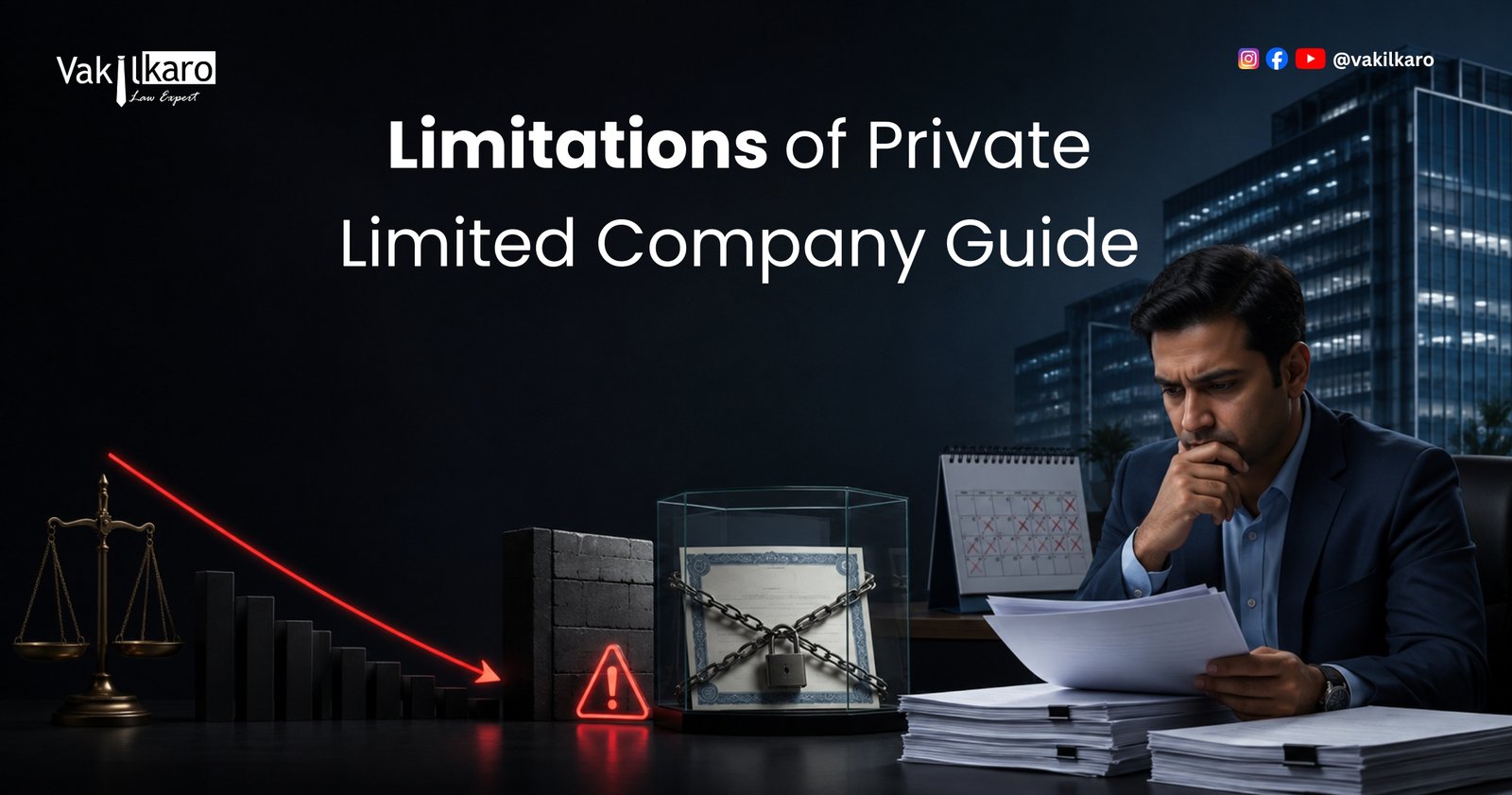
A Private Limited Company offers several long-term advantages, but it also involves ongoing legal and regulatory responsibilities. Businesses must maintain annual ROC compliance, accounting records, statutory registers, director compliances and other obligations under the Companies Act, 2013. This structure is generally suitable for businesses planning growth, investment and corporate expansion but may not be the most practical option for every entrepreneur. Selecting the appropriate business structure should always depend upon long-term commercial objectives rather than only registration convenience.
Many first-time founders believe that no business activity means no compliance. This is one of the most common misconceptions regarding company incorporation. Maintaining a Private Limited Company generally involves recurring professional support.
The recurring compliance cost of a company should not be viewed as an unnecessary expense. Proper compliance:
Many founders register a Private Limited Company simply because they believe it enhances business prestige. A stronger legal structure is valuable only when it supports the actual commercial objectives of the business. The simple answer is:
The most expensive mistake is not choosing a Private Limited Company. The most expensive mistake is choosing the wrong business structure. A founder who incorporates unnecessarily may spend years maintaining compliance without receiving proportional commercial benefits. Conversely, a founder who delays incorporation despite rapid growth may face investment, banking and governance challenges later. For this reason, Vakilkaro evaluates the business model first and recommends incorporation only where it genuinely supports the founder's long-term commercial objectives.
| Limitation | Business Impact |
|---|---|
| Annual Compliance | Recurring statutory filings throughout the company's existence |
| Higher Professional Costs | Accounting, legal and compliance expenses |
| Corporate Governance | Structured management responsibilities |
| Regulatory Compliance | Multiple laws and authorities may apply |
| Documentation | Extensive record maintenance |
| Share Transfer Restrictions | Internal procedures apply before ownership changes |
| Time Commitment | Regular compliance and governance activities |
Key Highlights
- Annual ROC Compliance Required
- Regular Accounting & Record Maintenance
- Director Responsibilities Continue After Incorporation
- Governance Procedures Must Be Followed
- Compliance Costs Increase with Growth
- Not Every Small Business Requires Incorporation
- Corporate Records Must Be Maintained
- Regulatory Scrutiny May Increase
- Founder Time Commitment is Higher
- Long-Term Planning is Essential
Introduction
Entrepreneurs often hear that a Private Limited Company is the best legal structure for starting a business. While this may be true for many startups and growth-oriented enterprises, the answer is not universal. Every business operates under different commercial conditions, financial capacities and long-term objectives.
For example, a technology startup planning to raise venture capital has very different legal requirements compared to a local retail business operated by a single owner. Similarly, a manufacturing company expecting institutional finance will benefit from corporate governance, whereas a freelance consultant working independently may find the compliance obligations disproportionate to the size of the business.
The Companies Act, 2013 provides a strong legal framework for incorporated companies, but this framework also introduces recurring responsibilities. Directors become responsible for statutory compliance, companies are expected to maintain proper corporate records and governance procedures become part of day-to-day administration.
Understanding these responsibilities before incorporation helps founders avoid unrealistic expectations and select the legal structure that genuinely supports their business goals.
Rather than asking:
"Is a Private Limited Company the best structure?"
Founders should ask:
"Is a Private Limited Company the best structure for my business today and for the business I want to build over the next five to ten years?"
Common Myths About the Limitations of a Private Limited Company
Many entrepreneurs postpone company incorporation because of myths and misconceptions rather than actual legal requirements. While a Private Limited Company certainly involves recurring compliance and governance obligations, many of the concerns surrounding incorporation are either outdated or misunderstood.
Understanding the reality behind these myths helps founders make informed business decisions instead of relying on incomplete information.
Myth 1 – A Private Limited Company is Too Expensive to Maintain
Reality:
A Private Limited Company does involve recurring compliance costs. However, these costs should be evaluated in relation to the commercial benefits the structure provides.
For businesses planning:
- Investment
- Expansion
- Institutional Finance
- Corporate Contracts
the long-term value frequently exceeds the recurring compliance expenditure.
Myth 2 – Small Businesses Should Never Incorporate
Reality:
Business size alone should not determine the legal structure.
A small technology startup expecting venture capital may benefit from incorporation immediately, whereas a larger local business with limited expansion plans may not.
The correct structure depends upon future objectives rather than present turnover.
Myth 3 – Annual Compliance is Unnecessarily Complicated
Reality:
Compliance becomes manageable when:
- Proper accounting systems exist.
- Corporate records are maintained.
- Professional guidance is available.
- Compliance calendars are followed.
Most difficulties arise from delayed planning rather than the compliance process itself.
Myth 4 – A Private Limited Company Automatically Reduces Tax
Reality:
The legal structure and tax liability are separate considerations.
Tax outcomes depend upon:
- Applicable Tax Regime
- Business Income
- Statutory Provisions
- Government Policies
The decision to incorporate should therefore never be based solely on taxation.
Myth 5 – Incorporation Guarantees Investment
Reality:
A Private Limited Company provides the legal framework preferred by investors.
However, investment decisions also depend upon:
- Business Model
- Revenue
- Market Opportunity
- Financial Performance
- Governance
- Team
Incorporation improves investment readiness but does not guarantee funding.
Myth 6 – One Person Cannot Run a Private Limited Company
Reality:
Although a Private Limited Company generally requires at least two shareholders, many businesses operate effectively with a small promoter group while maintaining professional governance.
Where a true single-owner structure is required, entrepreneurs may also evaluate an OPC where eligible.
Myth 7 – Company Registration Protects the Brand
Reality:
Company incorporation establishes the legal entity.
Trademark Registration protects the commercial brand.
Both processes serve different legal purposes and should be planned together.
Myth 8 – Compliance Begins Only After Business Starts
Reality:
Many statutory responsibilities arise because the company exists, irrespective of turnover.
Founders should therefore prepare a compliance calendar immediately after incorporation.
15 Major Limitations of a Private Limited Company
A Private Limited Company offers several long-term advantages, but it also creates legal and administrative responsibilities that continue throughout the life of the business. These responsibilities should not be viewed as disadvantages in themselves; rather, they represent the obligations that accompany the privileges of operating as a corporate entity.
Understanding these limitations helps entrepreneurs determine whether incorporation aligns with their business objectives, available resources and long-term strategy.
1. Mandatory Annual Compliance
One of the most significant responsibilities of a Private Limited Company is ongoing statutory compliance.
Unlike a proprietorship, a company cannot simply operate without maintaining legal records.
Typical compliance activities include:
- Annual Financial Statements
- Annual Return
- Board Meetings
- Statutory Registers
- Director KYC
- Income Tax Return
- Other applicable filings
These obligations generally continue even where business activity is minimal.
Business Impact
Failure to complete statutory filings may result in:
- Additional Filing Fees
- Regulatory Notices
- Compliance Difficulties
- Operational Delays
2. Higher Professional Costs
Businesses often require assistance with:
- Accounting
- Company Secretarial Work
- Legal Advisory
- Income Tax Compliance
- ROC Compliance
Professional costs should therefore be considered while selecting the business structure.
3. Accounting Responsibilities
A company is generally expected to maintain proper books of account reflecting its financial transactions.
Good accounting practices support:
- Tax Compliance
- Audit
- Investor Due Diligence
- Financial Reporting
Ignoring accounting responsibilities frequently creates larger compliance problems later.
4. Audit Requirements (Where Applicable)
Depending upon the applicable legal framework and business circumstances, statutory audit obligations may arise.
Businesses should evaluate audit requirements in consultation with qualified professionals.
5. Board Meetings and Corporate Governance
Unlike informal business structures, a company operates through an organised governance framework.
The Board of Directors should conduct meetings in accordance with applicable legal requirements.
Proper governance includes:
- Board Resolutions
- Meeting Minutes
- Decision Records
This strengthens transparency but also increases administrative responsibility.
6. Director KYC Compliance
Directors holding DIN are generally required to complete prescribed KYC requirements.
Failure to complete applicable KYC compliance may affect the active status of the Director Identification Number.
7. Statutory Registers
Companies are generally required to maintain prescribed statutory records.
Examples include:
- Register of Members
- Register of Directors
- Share Records
- Meeting Records
Maintaining these registers is an ongoing responsibility.
8. Regulatory Scrutiny
Corporate entities generally operate within a more structured regulatory environment than informal businesses.
Authorities may examine:
- Corporate Filings
- Financial Records
- Governance Practices
- Statutory Compliance
This promotes transparency but requires disciplined record maintenance.
9. Share Transfer Restrictions
Unlike publicly traded companies, Private Limited Companies generally impose restrictions on the transfer of shares through their Articles of Association.
These restrictions help preserve private ownership but may reduce flexibility in certain situations.
10. Additional Compliance During Growth
As the business expands, additional legal responsibilities often arise.
Examples include:
- New Investors
- Additional Directors
- Increased Capital
- New Business Activities
- Corporate Restructuring
Growth therefore increases both opportunity and compliance.
11. Time Commitment by Founders
Running a company requires founders to devote time not only to business development but also to governance and compliance.
Typical responsibilities include:
- Reviewing Corporate Documents
- Approving Board Decisions
- Monitoring Compliance Calendar
- Coordinating Professional Advisors
Businesses without adequate administrative capacity should consider this carefully.
12. Hidden Cost of Running a Company
Many entrepreneurs evaluate only the incorporation cost while ignoring recurring operational expenses.
Typical ongoing costs may include:
- Accounting Services
- ROC Compliance
- Income Tax Compliance
- Legal Advisory
- Secretarial Support
- Digital Signature Renewal
- Professional Certifications
The total cost of ownership therefore extends beyond the initial registration fee.
Vakilkaro Recommendation
Founders should prepare an annual compliance budget before incorporation rather than focusing only on the one-time registration expense.
13. Corporate Records Must Be Maintained
Every important corporate decision should be properly documented.
Examples include:
- Appointment of Directors
- Share Allotment
- Borrowings
- Capital Changes
- Corporate Resolutions
Maintaining organised records supports legal certainty and simplifies future due diligence.
14. More Formal Decision-Making
Business decisions within a company generally require greater procedural discipline.
Depending upon the matter, decisions may require:
- Board Resolution
- Shareholder Approval
- Special Resolution
- Statutory Filing
Although this increases documentation, it also improves governance.
15. Not Suitable for Every Business
A Private Limited Company is not automatically the best structure for every entrepreneur.
Businesses with:
- Very Small Operations
- Limited Growth Plans
- No External Investment
- Minimal Compliance Capacity
may initially benefit from alternative structures such as:
- Sole Proprietorship
- Partnership Firm
- LLP
- OPC
Selecting the correct legal structure should always depend upon business objectives rather than market trends.
Hidden Cost of Running a Private Limited Company
Many entrepreneurs calculate only the incorporation fee.
However, the actual cost of operating a company generally includes:
| Cost Area | Typical Nature |
|---|---|
| ROC Compliance | Annual |
| Accounting | Recurring |
| Tax Compliance | Annual / Periodic |
| Professional Advisory | As Required |
| DSC Renewal | Periodic |
| Statutory Record Maintenance | Continuous |
| Governance Documentation | Continuous |
Understanding these recurring responsibilities helps founders prepare realistic business budgets.
- Protects the company.
- Improves investor confidence.
- Strengthens banking relationships.
- Reduces future legal risk.
Founder Decision Summary
A Private Limited Company remains one of the strongest legal structures for businesses planning long-term growth.
However, founders should choose it only if they are prepared to maintain:
- Corporate Governance
- Annual Compliance
- Financial Discipline
- Proper Documentation
- Long-Term Legal Planning
Businesses unwilling to undertake these responsibilities may find another structure more suitable during the early stages.
Who Should NOT Register a Private Limited Company?
A Private Limited Company is one of the strongest legal structures available under the Companies Act, 2013, but it is not the ideal choice for every entrepreneur. Choosing incorporation without evaluating the nature of the business, expected growth, compliance capacity and long-term objectives may increase administrative burden without providing proportional commercial benefits.
Rather than asking whether a Private Limited Company is good or bad, founders should ask whether it is the right structure for their present business stage and future vision.
The following categories of businesses may wish to evaluate alternative structures before incorporating.
Small Local Businesses
Businesses operating only within a limited geographical area and serving a small customer base may not immediately require a corporate structure.
Examples include:
- Local Retail Shops
- Small Grocery Stores
- Neighbourhood Service Providers
- Home-Based Businesses
If there are no immediate plans for expansion, investment or institutional financing, a simpler business structure may be sufficient during the initial stage.
Freelancers and Independent Professionals
Individuals working independently often have straightforward business operations.
Examples include:
- Freelance Designers
- Content Writers
- Photographers
- Trainers
- Individual Consultants
Where the business is closely linked to the individual's personal expertise and no external investment is expected, alternative legal structures may be more practical during the early years.
Businesses Seeking Minimum Compliance
A Private Limited Company requires ongoing statutory compliance.
Entrepreneurs unwilling or unable to maintain:
- Annual ROC Filings
- Corporate Records
- Board Meetings
- Accounting Systems
- Director Compliance
should carefully evaluate whether incorporation presently aligns with their operational capacity.
Temporary or Short-Term Ventures
Projects created only for a limited duration or specific contract may not always justify the recurring compliance obligations associated with a company.
Business objectives should therefore be considered before incorporation.
Should Every Business Become a Private Limited Company?
No.
A Private Limited Company is an excellent legal structure for many businesses, but it is not automatically the right choice for every entrepreneur.
The suitability of incorporation depends upon several practical factors, including:
- Business Vision
- Expected Growth
- Funding Requirements
- Number of Founders
- Compliance Capacity
- Industry
- Tax Planning
- Corporate Governance Needs
Businesses planning long-term expansion, external investment and structured growth generally benefit from incorporation.
However, businesses operating on a very small scale with limited commercial objectives may initially find other structures more practical.
Businesses That Commonly Benefit from Incorporation
- Technology Startups
- Manufacturing Companies
- Healthcare Businesses
- D2C Brands
- Export Businesses
- Professional Firms Planning Expansion
- Investor-backed Businesses
Businesses That May Consider Other Structures Initially
- Freelancers
- Individual Consultants
- Small Local Retail Businesses
- Businesses with Minimal Turnover
- Temporary Business Ventures
- Businesses Without Expansion Plans
Better Alternatives to a Private Limited Company
Choosing an alternative structure does not necessarily indicate that the business is less professional. The appropriate structure depends upon commercial requirements rather than popularity.
Sole Proprietorship
A Sole Proprietorship may be suitable where:
- One individual owns the business.
- Operations remain relatively small.
- Compliance simplicity is preferred.
- External investment is unlikely.
Advantages
- Simple to start.
- Lower compliance.
- Direct control by the proprietor.
Limitations
- No separate legal entity.
- Unlimited personal liability.
- Limited fundraising capability.
Partnership Firm
A Partnership Firm may be appropriate where:
- Two or more persons jointly operate the business.
- External investment is not anticipated.
- Informal management is preferred.
Advantages
- Shared ownership.
- Relatively simple structure.
- Lower compliance compared with companies.
Limitations
- No separate legal entity.
- Unlimited liability in many situations.
- Succession challenges.
Limited Liability Partnership (LLP)
An LLP combines limited liability with relatively flexible internal management.
It may be suitable where:
- Professional services are provided.
- Partners actively manage the business.
- Equity investment is not the primary objective.
Advantages
- Separate legal entity.
- Limited liability.
- Lower compliance than a company in several situations.
Limitations
- Less preferred by venture capital investors.
- Limited flexibility for issuing equity.
One Person Company (OPC)
An OPC may be considered where:
- A single entrepreneur intends to operate the business.
- Corporate identity is desired.
- Multiple shareholders are not immediately required.
As the business expands, founders may later evaluate conversion into a Private Limited Company if additional shareholders or investors become involved.
Business Decision Framework
Before selecting a Private Limited Company, every entrepreneur should evaluate the following questions.
Business Growth
- Will the business expand beyond the local market?
- Is national or international growth expected?
Investment
- Will angel investors participate?
- Is venture capital anticipated?
- Will equity funding be required?
Ownership
- Will new shareholders join later?
- Is family succession planned?
- Will ownership be transferred in future?
Compliance
- Can the business maintain annual corporate compliance?
- Is accounting support available?
- Can governance procedures be followed?
Brand
- Will trademark protection become important?
- Will intellectual property create business value?
Long-Term Vision
- Is the objective to build a long-term enterprise?
- Will the company eventually employ professional management?
Decision Guide
If the answer to most of these questions is Yes, a Private Limited Company generally provides a stronger legal framework.
If most answers are No, another structure may initially be more appropriate.
When Should You Convert Later?
Many successful businesses begin under a simpler structure and later convert into a Private Limited Company as they grow.
Common triggers include:
- Rapid Revenue Growth.
- Multiple Founders.
- Institutional Customers.
- Investor Interest.
- National Expansion.
- Better Banking Requirements.
- Corporate Procurement.
- ESOP Planning.
Conversion at the appropriate stage often balances compliance with commercial needs.
Vakilkaro Recommendation
There is no legal requirement to incorporate on the first day of business.
However, founders should avoid delaying incorporation once business growth, investment or corporate expansion becomes a realistic objective.
Industry-wise Decision Matrix
| Industry | Recommended Structure During Early Stage | When Private Limited Company Becomes Beneficial |
|---|---|---|
| Technology Startup | Private Limited Company | Immediately or before fundraising |
| Manufacturing | Proprietorship / Partnership (small scale) | Before expansion or institutional finance |
| Consulting | Proprietorship / LLP | When scaling or hiring teams |
| Export Business | LLP / Proprietorship | Before international expansion |
| Healthcare | LLP / Private Limited | When corporate growth begins |
| D2C Brand | Proprietorship | Before brand expansion and investor discussions |
Founder Decision Matrix
| Business Goal | Recommended Structure |
|---|---|
| Single Founder, Small Business | Sole Proprietorship / OPC |
| Professional Partnership | LLP |
| Family Business with Limited Expansion | Partnership / LLP |
| Startup Seeking Investment | Private Limited Company |
| High-Growth Business | Private Limited Company |
| National Brand Building | Private Limited Company |
Final Business Recommendation
Choosing the correct legal structure should be viewed as a strategic business decision rather than merely a registration exercise.
A Private Limited Company offers exceptional long-term advantages for scalable businesses, but those advantages are realised only when the founder is prepared to maintain the corresponding compliance, governance and operational responsibilities.
The objective should never be to select the most popular business structure.
The objective should be to select the structure that best supports the company's present requirements while enabling future commercial growth.
Myth 9 – A Private Limited Company is Suitable for Every Business
Reality:
Every business should select its legal structure according to:
- Business Vision
- Funding Plans
- Compliance Capacity
- Ownership Model
- Growth Strategy
There is no universally correct business structure.
Myth 10 – Once Incorporated, No Further Planning is Required
Reality:
Incorporation is the starting point of:
- Corporate Governance
- Compliance
- Banking
- Tax Planning
- Intellectual Property Strategy
- Business Expansion
Successful companies continue strengthening these areas after incorporation.
Vakilkaro Expert Insights
Insight 1
The cost of selecting the wrong business structure is often significantly higher than the cost of company incorporation itself.
Insight 2
Founders should evaluate the next five years of business growth rather than only the first six months.
Insight 3
Businesses expecting investment should prepare governance systems before approaching investors rather than after receiving funding.
Insight 4
Compliance should be viewed as a mechanism for protecting enterprise value rather than merely satisfying legal requirements.
Insight 5
The most successful businesses treat legal structure, taxation, intellectual property and governance as parts of a single long-term growth strategy.
Real Business Case Studies
Case Study 1 – Wrong Structure for a Technology Startup
Background
A software startup initially operated as a sole proprietorship to minimise compliance.
Challenge
An angel investor required incorporation before considering equity investment.
Vakilkaro Solution
The business was incorporated as a Private Limited Company with appropriate constitutional documents and shareholding structure.
Learning
Businesses expecting external investment should evaluate incorporation before fundraising discussions begin.
Case Study 2 – Compliance Neglect
Background
A newly incorporated company focused entirely on sales and ignored annual compliance requirements.
Challenge
Multiple statutory filings became overdue, increasing compliance costs and administrative pressure.
Vakilkaro Solution
A structured compliance calendar and professional monitoring system were implemented.
Learning
Compliance planning should begin immediately after incorporation.
Case Study 3 – Local Retail Business
Background
A neighbourhood retail business considered incorporating solely because competitors had done so.
Challenge
The business had no expansion plans, no external investment requirements and very limited compliance resources.
Vakilkaro Recommendation
After evaluating the business objectives, incorporation was deferred until future growth justified the additional corporate responsibilities.
Learning
The most appropriate legal structure depends on the business model—not on market trends.
Frequently asked questions
Does every business need a Private Limited Company?+
No. The appropriate legal structure depends upon business objectives, compliance capacity and long-term growth plans.
Is annual compliance compulsory?+
Yes. Incorporated companies are generally required to maintain statutory compliance under applicable laws.
Can I change my business structure later?+
Yes. Subject to the applicable legal procedure, businesses may convert to a different structure where permitted under law.
Is a Private Limited Company suitable for freelancers?+
Not necessarily. Many freelancers may initially find a proprietorship or other suitable structure more practical depending on their objectives.
Are compliance costs recurring?+
Yes. A Private Limited Company generally involves ongoing compliance obligations throughout its existence.
Can I avoid annual filings if there is no business?+
Not always. Several statutory obligations continue even where business activity is limited or absent.
Does incorporation automatically improve business credibility?+
Incorporation often improves credibility, but reputation ultimately depends upon governance, compliance and business performance.
Can I receive investment without incorporating?+
Some forms of investment are possible under other structures, but professional equity investors generally prefer Private Limited Companies.
Does incorporation reduce personal liability?+
In general, shareholder liability is limited, subject to the Companies Act and other applicable laws.
Can Vakilkaro help decide whether incorporation is appropriate?+
Yes. Vakilkaro evaluates business objectives before recommending the most suitable legal structure rather than assuming that incorporation is appropriate for every business.
Why Choose Vakilkaro?+
Vakilkaro believes that good legal advice begins with selecting the right structure—not selling the most expensive registration. Our advisory approach includes: Business Structure Evaluation Growth Planning Compliance Planning Startup Advisory Tax Coordination Trademark Strategy Corporate Governance Guidance Our objective is to recommend the structure that best supports the entrepreneur's long-term commercial interests.
Final Call to Action+
Choose the Right Structure Before You Register+
A Private Limited Company offers significant long-term advantages—but only where those advantages align with your business objectives. Before registering your business, discuss your growth plans, funding expectations and compliance capacity with Vakilkaro. Speak with a Vakilkaro Business Structure Expert today and choose the legal framework that supports your future—not just your present.
Internal Linking Notes (Developer)+
Core Service+
Private Limited Company Registration
Supporting Guides+
Benefits of Private Limited Company Private Limited Company Taxation Annual Compliance Guide Startup India Guide Investment Readiness Guide Trademark Registration Guide LLP Registration OPC Registration Sole Proprietorship Registration Partnership Firm Registration
External Authority Notes (Developer)+
Reference official sources only: Ministry of Corporate Affairs (MCA) Companies Act, 2013 Income Tax Department Startup India (DPIIT)
Schema Recommendation+
Recommended structured data: FAQ Schema Article Schema Service Schema Organization Schema Breadcrumb Schema
Developer Notes+
Implement FAQ Schema for all FAQs. Add comparison cards linking to: Private Limited vs LLP Private Limited vs OPC Private Limited vs Partnership Private Limited vs Sole Proprietorship Display a "Related Guides" section before the CTA. Link the first occurrence of Benefits Guide, Taxation Guide, Annual Compliance Guide and Startup India Guide. Add CTA buttons immediately after the Hero and again at the bottom of the page.